
Hi there, quick question: when someone asks Google, ChatGPT, Gemini, or another AI tool, “Who’s the best plumber, dentist, contractor, or marketing agency near me?” does your business have a realistic chance of being recommended?
In 2026, local SEO is no longer just about ranking in the traditional Google results or appearing in the map pack. Search engines and AI assistants are now combining information from your website, Google Business Profile, reviews, social platforms, directories, and other trusted sources to decide which businesses deserve attention.
That means your online presence needs to be clear, consistent, useful, and trustworthy.
The good news? You don’t need a giant marketing budget or a warehouse full of robots. You need a smart plan, and the willingness to keep your digital storefront in good shape.
What Is Local SEO in 2026?
Local SEO is the process of improving your online visibility so nearby customers can find, understand, and choose your business.
In 2026, that includes:
- Traditional Google search results
- Google Maps and local listings
- AI Overviews and AI-generated answers
- Voice and conversational search
- Social search on platforms like Facebook, Instagram, YouTube, and TikTok
- Business directories and review platforms
AI search is changing how results are presented, but the fundamentals remain familiar. Search engines still need reliable information about who you are, what you do, where you operate, and why customers should trust you.
How AI Search Is Changing Local Visibility
Traditional search usually gives users a list of links. AI search often gives them a summarized answer.
For example, instead of searching:
“Website designer in Glen Rose”
a customer might ask:
“Which web development company near Glen Rose works with small businesses and can improve an outdated website?”
That second query contains more context, intent, and expectations. AI systems attempt to interpret the whole question, not just match a keyword.
Why it matters
If your website only says, “We provide quality services,” AI has very little to work with. If your site clearly explains your services, service areas, process, customer results, and expertise, it becomes easier for search systems to understand and reference your business.
AI search rewards businesses that make the answer obvious.
7 Local SEO Steps Small Businesses Should Take Now
1. Make your Google Business Profile complete, and keep it alive
Your Google Business Profile is one of the most important sources of local business information.
Review every part of your profile:
- Business name
- Primary and secondary categories
- Address or service area
- Phone number
- Website URL
- Business hours and holiday hours
- Services and descriptions
- Photos
- Booking, messaging, or quote options
- Customer questions and answers
Do not treat your profile like a “set it and forget it” project. Add fresh photos, publish useful updates, answer questions, and keep your information current.
Why it matters
AI systems may use business listings, reviews, and profile information when generating local recommendations. An incomplete or outdated profile gives competitors an easy advantage.
2. Write service pages that answer real customer questions
Your service pages should do more than list features. They should answer the questions customers ask before contacting you.
For each major service, explain:
- What the service includes
- Who it is for
- What problem it solves
- How your process works
- What customers can expect
- Where you provide the service
- What the next step should be
Use natural headings such as:
- “Do you provide local SEO services in my area?”
- “How long does a website redesign take?”
- “What does Google Ads management include?”
- “Can you build an ecommerce website for a growing business?”
Give a direct answer near the top of each section, then expand with helpful detail.
Why it matters
Clear, question-focused content is easier for people to scan and easier for AI search tools to summarize. It also helps visitors decide faster whether you are the right fit.
Need help creating content that attracts and educates local customers? Explore Catelleon’s content marketing services.
3. Build location pages, but don’t create copy-and-paste city pages
If you serve multiple communities, location pages can help you show up for relevant searches.
However, simply swapping “Granbury” for “Glen Rose” across ten nearly identical pages is not a winning strategy. Add genuinely local information, such as:
- Services most requested in that area
- Local customer concerns
- Communities or neighborhoods served
- Driving distance or service availability
- Local projects, partnerships, or experience
- Helpful answers specific to that market
You can view the communities Catelleon serves on our service areas page.
Why it matters
AI search attempts to distinguish real local relevance from pages built only to capture keywords. Useful, specific location content gives both customers and search systems a better reason to trust you.
4. Earn detailed, recent reviews
Reviews are not just a reputation tool anymore. They help describe your business in the language customers actually use.
Encourage happy customers to mention:
- The service they purchased
- The problem you solved
- Their location
- What they appreciated about your process
- The result they experienced
Never pressure customers to write a specific review or offer rewards in exchange for positive feedback. Simply make it easy for satisfied customers to share honest experiences.
Respond to every review, positive, neutral, and negative, with professionalism and a human voice.
Why it matters
A steady stream of specific, recent reviews can provide stronger trust signals than a pile of vague reviews from several years ago. Plus, thoughtful responses show that your business is active and accountable.
5. Keep your business information consistent everywhere
AI tools cross-check information from multiple sources. Your business name, address, phone number, hours, services, and website should match across:
- Google Business Profile
- Your website
- Social media profiles
- Apple Business Connect
- Bing Places
- Local directories
- Industry associations
Even small inconsistencies can create confusion. If one listing shows an old phone number and another uses a different business name, search systems may hesitate to connect those profiles to the same company.
Why it matters
Consistency strengthens your digital identity. Think of it as making sure every online witness tells the same story about your business.
6. Improve the website behind your local SEO
Local search visibility gets people to your website. Your website still needs to turn that attention into action.
Focus on:
- Mobile-friendly design
- Fast page loading
- Simple navigation
- Clear service descriptions
- Visible phone and contact options
- Strong calls to action
- Accessible forms
- Trust signals and testimonials
- Secure, technically healthy pages
This is where small business web design, landing page design, and conversion rate optimization work together.
If your website is outdated, difficult to manage, or technically fragile, consider professional website maintenance services or website redesign services. A polished digital storefront is critical when customers are comparing several local businesses at once.
Why it matters
Ranking is only half the job. Your website must be found, read, and trusted, and then make it easy for visitors to contact you.
7. Connect SEO with your other marketing channels
Local SEO does not operate in a tiny isolated box. Your other marketing efforts can reinforce brand awareness, expertise, and customer trust.
Consider how these channels support local visibility:
- PPC advertising can create immediate visibility for priority services.
- Professional google ads management can help control targeting, budget, and landing-page performance.
- Social media marketing services can increase engagement and showcase your work.
- Content marketing can answer customer questions and build topical authority.
- Ecommerce website development can help product-based businesses sell beyond their immediate service area.
- SEO can build long-term visibility that compounds over time.
Why it matters
Customers rarely follow a perfectly straight path. They may discover you through Maps, watch a social video, read a blog post, click an ad, and then visit your website three days later. Consistent messaging across channels helps your business stay memorable.
What AI Search Does Not Mean
Let’s clear up a few myths.
AI search does not mean you need to stuff your website with AI-generated content
AI can help with research, brainstorming, and efficiency. But generic, unedited content is easy to spot, and rarely helpful.
Your content should include real expertise, accurate details, original examples, and a point of view that sounds like your business.
There is no magic “AI schema” button
Structured data can help search engines interpret your organization, services, location, hours, and other information. But schema must accurately match visible content. It is not a shortcut to force an AI system to recommend you.
Keywords still matter, but intent matters more
You should still use phrases your customers search for, including SEO services for small business, local SEO services, or website redesign services. Just avoid awkward repetition.
Write for the person asking the question first. Search engines are getting much better at understanding natural language.
A Simple 30-Day Local SEO Action Plan
Want to make progress without turning marketing into a second full-time job? Start here.
Week 1: Fix your foundation
- Audit your Google Business Profile
- Correct inconsistent business information
- Check your website contact details
- Confirm your service areas and business hours
- Test your website on a mobile phone
Week 2: Improve your core pages
- Update your homepage
- Strengthen your main service pages
- Add direct answers to common questions
- Create or improve location pages
- Add clear calls to action
Week 3: Build trust
- Ask recent customers for honest reviews
- Respond to existing reviews
- Add testimonials and project examples
- Upload fresh business photos
- Publish one helpful local article or guide
Week 4: Measure and refine
- Track calls, forms, bookings, and quote requests
- Review Google Search Console data
- Check local rankings and map visibility
- Identify pages with strong traffic but weak engagement
- Improve headlines, calls to action, and landing pages
The goal is not to “beat the algorithm.” The goal is to make your business the clearest, most useful, and most trustworthy answer for the customers you want to serve.
Frequently Asked Questions About Local SEO and AI Search
What is the difference between local SEO and AI search optimization?
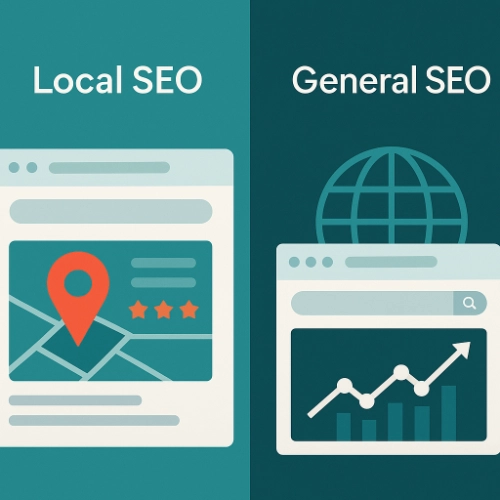
Local SEO focuses on visibility in location-based searches, Maps, directories, and organic results. AI search optimization focuses on making your business information easy for AI systems to understand, summarize, and cite. The two overlap heavily because both depend on accurate business details, useful content, reviews, and technical website quality.
Can a small business appear in AI-generated search results?
Yes. Small businesses can be referenced when they provide clear, trustworthy, relevant information. A complete Google Business Profile, strong reviews, well-organized service pages, consistent business details, and a healthy website all improve your chances of being considered.
How important are Google reviews for local SEO in 2026?
Reviews remain very important. Quality, relevance, recency, and thoughtful business responses all matter. Encourage genuine feedback from customers and never fabricate or manipulate reviews.
Should I use AI to write my local SEO content?
You can use AI as an assistant for research, outlines, and first drafts. However, every piece should receive human review and include accurate, original information about your business. Helpful content beats mass-produced filler.
How long does local SEO take to work?
Some improvements, such as correcting your profile information or improving page speed, can help quickly. Meaningful growth in rankings, visibility, and leads often takes several months and depends on competition, location, website quality, content, and consistency.
Ready to Future-Proof Your Local Visibility?
AI search is rewriting the presentation layer of search, but the winning strategy is refreshingly human: be clear, be helpful, keep your promises, and make it easy for customers to choose you.
At Catelleon Solutions, we help small and medium-sized businesses connect SEO, web development, content, paid advertising, and social media into a digital strategy that works together.
Explore our SEO services or start a conversation today.
HELLO! WE’RE LISTENING. Let’s talk about your project!
Sources and further reading: