
CATELLEON INSIGHTS
Your Next Customer Asked ChatGPT Before They Called You: Winning the Local Search Verification Loop
On this page
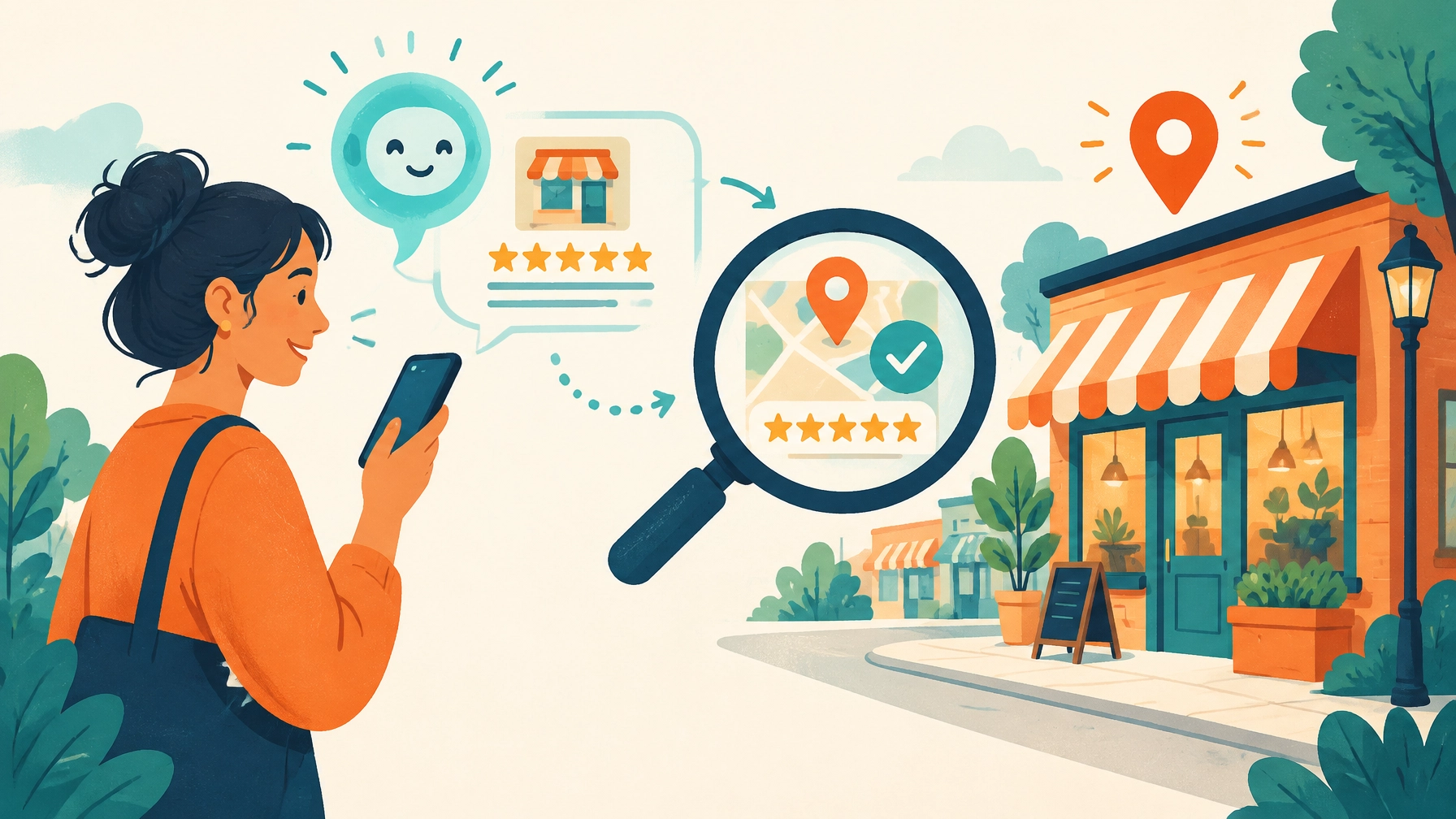
Hi there. Your next customer may ask ChatGPT, Gemini, or Claude who to call. But that may not be the moment they choose you.
They’ll likely check the recommendation against Google, reviews, social media, and your website first. In other words: AI may open the door, but customers still peek through the window before walking in.
That’s the local search verification loop, and it’s changing what effective local SEO services need to cover.
The quick version
- AI is becoming a common way to discover local businesses, but people often verify what it says before contacting one.
- Each AI platform may use different sources, and its recommendations can change from one query to the next.
- Reviews matter, but there’s no universal review-count target that guarantees an AI mention.
- Before the new year, make your public business information accurate, benchmark your reviews locally, strengthen your presence beyond Google, and test multiple AI tools.
From “find me a business” to “let me check”
SOCi’s 2026 Local Discovery Index found that 52% of surveyed U.S. consumers used AI tools to find a local business in the previous 30 days, up from 9% in 2025. But adoption doesn’t mean blind trust: 67% of AI users said they had received incorrect information about a local business, and 81% said they verify AI recommendations through other channels before contacting a business. (SOCi; Search Engine Land)
That second step can be a Google search, a review check, a social profile, or a quick look at your website. The journey isn’t a neat funnel. It’s more like a customer doing a few laps to make sure the business is real, available, and right for them.

Why it matters
An AI recommendation is not a sale. It’s an invitation to be checked out.
If your hours are outdated, your licensing record is wrong, or your website doesn’t clearly say what you do, that customer has an easy reason to move on. The goal is to make sure your business is found, read, and trusted wherever the customer looks next.
Two data points worth keeping in view
A 2026 study by 8ight.AI looked at AI answers to local-service questions and found that different assistants cited very different sources. In its sample, ChatGPT cited Yelp in none of 1,412 answers, but cited the Better Business Bureau in about 39% and government or licensing sites in about 25%. The study also found that businesses named by ChatGPT had a median of 175 Google reviews, compared with 97 for others, but the most-reviewed business checked in a location was still left off ChatGPT’s list about three times out of four. (8ight.AI study)
Synup’s November 2026 study looked specifically at Google AI Overviews, not every AI assistant. Across 28,072 searches, AI-named businesses had a median of 232 reviews, compared with 62 for nearby competitors. But there was no universal minimum: the median was 48 reviews for a handyman and 800 for a pizza restaurant. (Synup study)
Takeaway: Reviews are part of the picture, not a magic number. Your industry, market, public records, and the sources an AI checks all shape what customers see.
Your before-the-new-year verification-loop checklist
It’s early November 2026. You still have time to make useful improvements before the new year, without turning the holidays into a spreadsheet marathon.
Week 1: Clean up the public record
Check your business name, address, phone, service area, and license details wherever they appear. Start with relevant state or local licensing boards, contractor registries, and your Better Business Bureau profile. Then compare those details with your website and business listings.
Look for:
- An old business name or phone number
- A lapsed or missing license
- Different addresses or service areas across listings
- Out-of-date hours or services
- Duplicate profiles that could confuse customers
Why it matters: In 8ight.AI’s sample, ChatGPT cited a government or licensing site in about one in four answers. A stale public record can undermine an otherwise strong online presence.
Week 2: Benchmark reviews against your industry
Don’t chase a review-count goal someone picked out of thin air. Compare your profile with similar businesses in your trade and metro area. Synup’s research found very different review-count medians across industries, and metro size mattered, too.
Take a practical pass:
- Check your star rating and review count against local competitors.
- Set a steady, honest process for inviting customers to leave reviews.
- Respond to reviews in a timely, professional way.
- Use feedback to spot recurring customer concerns.
For many service businesses, protecting a rating around 4.8 or higher is a reasonable reputation goal, but it is not a promise of an AI recommendation. Your local competitive picture matters more than an arbitrary target.

Why it matters: A 4.9 rating is encouraging, but in 8ight.AI’s study, named and unnamed businesses both had a median rating of 4.9. Volume, credibility, and what other sources say about you matter too.
Week 3: Be findable beyond Google
Google still matters, but it’s not the only place that may inform an AI answer. Depending on your business, review and directory platforms such as Yelp, BBB, Angi, Expertise.com, and trade-specific directories may be worth checking. Prioritize platforms that are relevant to your industry and actually used by customers.
Then review your own website:
- Give each important service a clear, specific page.
- Name the areas you genuinely serve.
- Keep contact information, credentials, and service details current.
- Make it easy for someone to call, book, or request a quote.
Why it matters: If an assistant or customer checks your site after seeing a recommendation, clear service pages help confirm they’ve found the right business. A solid SEO foundation supports that discoverability, while website maintenance helps keep the details from quietly going stale.
Week 4: Test the loop, more than once
Ask ChatGPT, Claude, and Gemini the kinds of questions customers might ask, such as “Who’s a reliable roofer in [city]?” or “Which [service] business serves [area]?”
Run the same prompt on each tool, then try again later. The platforms don’t necessarily rely on the same sources, and 8ight.AI found that a median of 29% of business names overlapped when ChatGPT was asked the same question again about 39 minutes later.
Keep a simple note of:
- Whether your business appeared
- Which competitors appeared
- Whether the details were accurate
- Any cited sources you recognize
Also check Google’s Local Pack, but don’t assume it tells the whole story. Synup found that 60% of businesses named in Google AI Overviews were not in the Local Pack for that search. AI visibility and map-pack placement are related parts of local discovery, not interchangeable results.
Why it matters: One AI answer is a snapshot, not a report card. Testing several tools and repeating a few prompts gives you a more useful picture.

Ongoing: Treat recommendations as a repeatable win
Synup reported that only 41% of businesses named in its Google AI Overview sample were named again a few days later. That research covered Google AI Overviews, so it shouldn’t be treated as a universal rate across every AI platform. Still, the practical message is clear: visibility can shift.
Keep your listings, reviews, and service pages current. Make a quick monthly check part of your marketing routine. That’s one way to turn local SEO services into an ongoing system rather than a one-time cleanup.
Two myths to retire
“We just need more five-star reviews than everyone else.” More reviews can help, but the most-reviewed business in an 8ight.AI sample was still left off ChatGPT’s list about three times out of four. Named and unnamed businesses had the same median star rating. Build a strong review profile, yes, but pair it with accurate public records and relevant third-party presence.
“AI will replace Google for local search.” Not so fast. SOCi found that 81% of AI users verify recommendations through other channels before contacting a business. Google is still part of that loop. Make sure your social presence and paid search campaigns support a consistent story across the places customers check.
For more on the broader AI-search landscape, see our October AEO playbook. And if you’re looking for SEO services for small business, start with the fundamentals: accurate information, useful pages, and a reputation customers can verify.
Frequently asked questions
How many consumers use AI to find local businesses?
SOCi’s 2026 Local Discovery Index found that 52% of surveyed U.S. consumers used AI tools to find a local business in the previous 30 days. Its study also reported that usage had risen from 9% in 2025.
Do AI recommendations turn into customers if people check Google afterward?
Checking Google doesn’t guarantee a customer will choose you, but it gives you another opportunity to make a trustworthy impression. Keep your reviews, contact details, service information, and website consistent so the fact-check supports the recommendation.
How many Google reviews do I need to be recommended by AI?
There’s no universal minimum. Synup found median review counts varied substantially by industry, from 48 for handyman businesses to 800 for pizza restaurants in its Google AI Overview study. Use local competitors in your industry as your benchmark, not a one-size-fits-all number.
Why does ChatGPT recommend a competitor but not me?
AI tools can rely on different sources, and their answers can change between searches. Your competitor may have stronger visibility on sources that tool uses, a clearer public record, or more relevant information online. Test multiple tools and prompts, then check what each answer cites.
WE’RE LISTENING
Winning the verification loop isn’t about finding a secret trick. It’s about making your business easy to discover and easy to trust. Wherever customers check.
Catelleon Solutions helps small and mid-sized businesses strengthen their local SEO, websites, and digital marketing. Let’s talk about your project. We’re listening, and ready to help you make sure your business is found, read, and trusted.
Today!